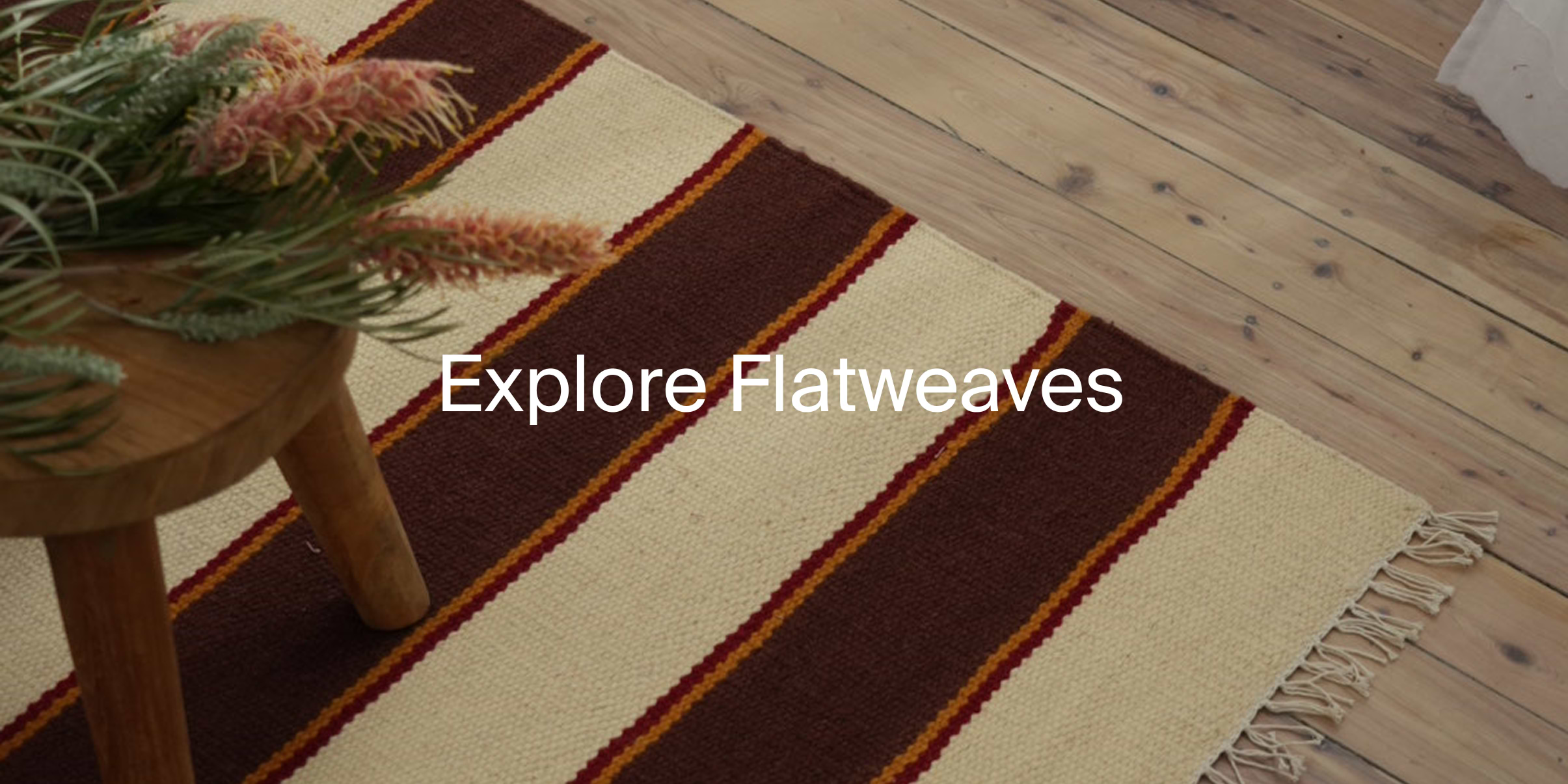
There are some areas of the home where a rug needs to do a little more.
The hallway that sees everyone coming and going. The kitchen where breakfast crumbs somehow appear before breakfast is even finished. These are hardworking spaces, where practicality matters just as much as how something looks.
And they’re exactly where flatweave runners come into their own.
With their low-profile construction, tightly woven surface and understated texture, flatweave runners offer a beautiful balance between practicality and design. They bring warmth and softness to hard flooring without adding unnecessary bulk, making them particularly well suited to kitchens, hallways and other high-traffic areas of the home.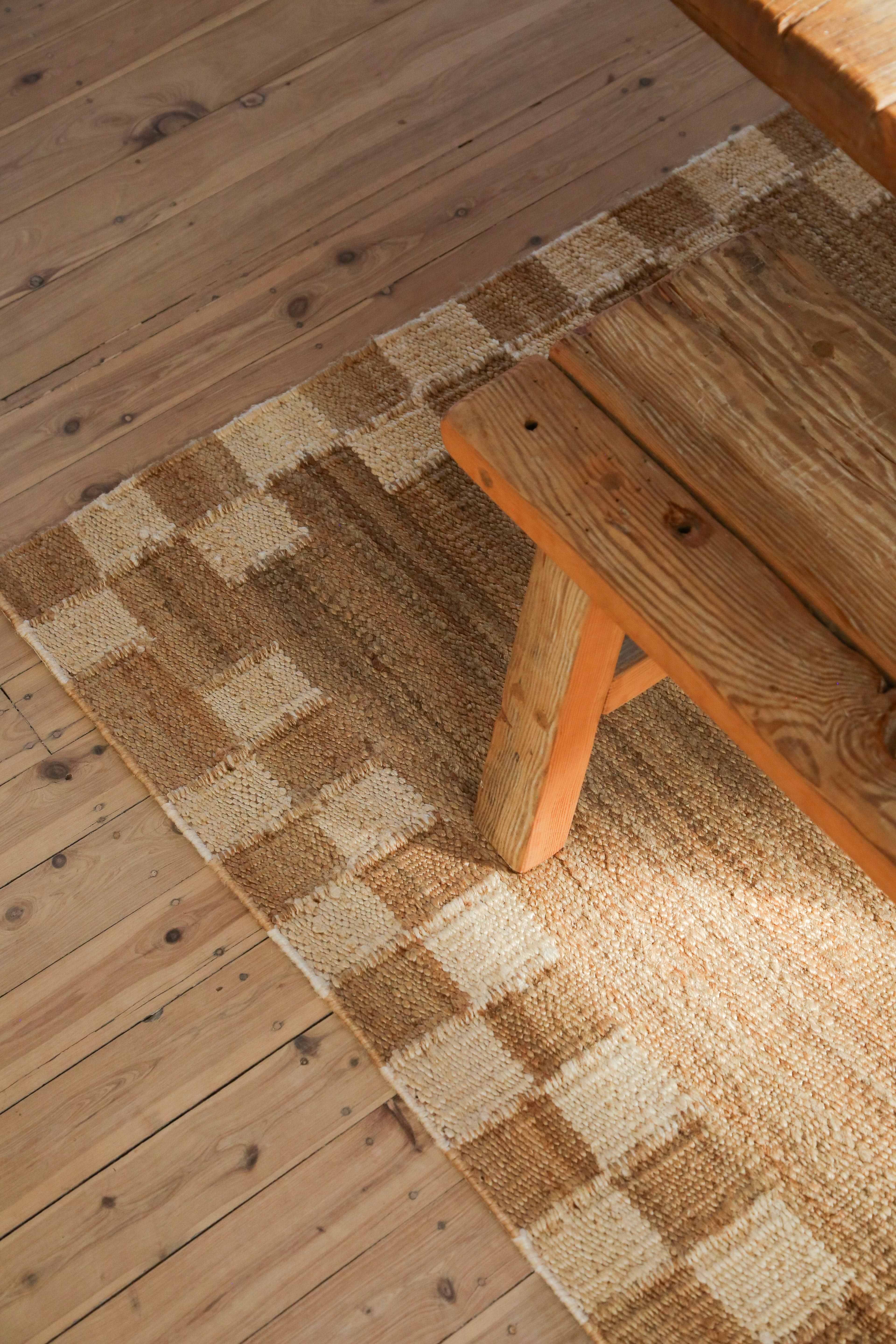
| Featuring our Fitzroy Check Border Rug in Natural
Unlike a traditional high-pile rug, a flatweave rug is woven without a raised pile. The fibres are closely woven together to create a flatter, more streamlined surface.
A flatweave runner uses this same construction in a long, narrow shape, making it particularly suited to spaces such as hallways, entrances and kitchens.
The result is a rug that feels lighter and more understated than a thick-pile rug, while still bringing texture, warmth and softness underfoot.
That low profile is also one of the biggest practical advantages of choosing a flatweave runner. It can sit neatly in narrow spaces, is easier to position around furniture and cabinetry, and generally creates less obstruction around doorways than a deeper-pile rug.
| Featuring our Terrain Flatweave Runner in Ochre
The key difference is in the construction.
Pile rugs have fibres that rise above the rug’s foundation, creating the plush or textured surface we typically associate with a thick rug. Flatweave rugs don’t have this raised pile. Instead, the fibres are woven together to form the surface itself.
Neither construction is inherently better. The right choice depends on where the rug is going and how you use the space.
A thick, plush rug can be beautiful where softness and comfort are the priority. In a busy kitchen or hallway, however, the lower profile and simpler surface of a flatweave can make everyday maintenance and movement through the space easier.
| Featuring our Bangalow Wool Rug in Paperbark & Terrain Flatweave Runner in Natural White
Why Flatweave Runners Work So Well in High-Traffic Areas
Hallways, entrances and kitchens can be some of the busiest areas in a home. They see constant movement, are often narrow and are usually surrounded by hard surfaces.
A flatweave runner adds softness without taking over the space.
Its streamlined construction makes it particularly practical for areas where people are constantly walking back and forth, while the long, narrow shape of a runner naturally suits passageways, galley kitchens and the space between kitchen cabinetry and an island.
For busy households, construction matters too. A flatter surface leaves less depth for dirt, crumbs and debris to settle into, making regular maintenance more straightforward.
| Featuring our Fitzroy Check Runner Rug in Cream
Low Profile, High Practicality
One of the biggest reasons to consider a flatweave runner for a kitchen or hallway is simply how little bulk it adds.
In spaces where every centimetre matters, a thick rug can sometimes interfere with doors, cabinetry or the natural flow of the room. A low-profile runner sits closer to the floor while still introducing warmth, texture and colour.
This makes flatweave runners particularly useful in narrow hallways, entrances, galley kitchens and other transitional spaces.
Will a Flatweave Runner Fit Under a Door?
A flatweave construction can offer better door clearance than a thick or high-pile rug, but it’s still important to measure before choosing your runner.
Check the clearance between the bottom of the door and the flooring, then compare this with the thickness of both your rug and any rug underlay you intend to use.
This is particularly important around entrance doors, pantry doors and other areas where a runner may sit directly within the door’s path.
| Featuring our Terrain Flatweave Runner in Burnt Umber
Is Wool a Good Material for a Hallway or Kitchen Runner?
The fibre you choose makes a difference, particularly in a rug designed for everyday use.
Wool offers a beautiful combination of natural softness, warmth and durability. Its natural resilience makes it well suited to areas that experience regular foot traffic, while still providing a comfortable surface underfoot.
For a hallway, this means a natural fibre that can handle the constant movement of everyday life. In a kitchen, wool brings warmth and softness to spaces often dominated by hard materials such as timber, stone and tile.
Our Terrain Flatweave Collection, for example, is woven from 100% wool with a low 5mm profile, combining the natural warmth of wool with a streamlined flatweave construction designed for everyday living.
| Featuring our Terrain Flatweave Runner in Gumnut
Are Flatweave Runners Easy to Clean?
No rug is maintenance-free, particularly in the busiest parts of the home. But the construction of a flatweave rug can make regular upkeep simpler.
Because there is no deep pile for crumbs, dust and debris to disappear into, dirt tends to remain closer to the surface where it can be removed through regular vacuuming.
This is particularly useful in kitchens, entrances and family homes where frequent cleaning is simply part of everyday life.
Flatweave runners can generally be vacuumed regularly, although you should always follow the specific care instructions for your rug and avoid vacuum settings or attachments that could damage the fibres.
For spills, acting quickly is important. Blot rather than rub the affected area and follow the recommended cleaning instructions for the rug’s particular fibre and construction.
The Terrain Flatweave Collection is easy to vacuum, suitable for spot cleaning and designed to work with robot vacuums, making it particularly practical for homes with children, pets or plenty of foot traffic.
For more detailed maintenance advice, see our Rug Care Guide.
Are Flatweave Runners Good for Homes With Kids and Pets?
The reality of a family home is that rugs need to cope with real life.
There will be crumbs. There will be muddy paws. There will be toys dragged across the floor and the occasional spill that happens five minutes before guests arrive.
For homes with kids and pets, the low-profile construction of a flatweave runner can make these everyday moments easier to manage. Regular vacuuming is straightforward, while the absence of a deep pile means there’s less depth for everyday debris to settle into.
A rug underlay can also be particularly useful in a busy family home, helping reduce movement as children and pets move through the space.
Of course, no natural fibre rug is completely maintenance-free. Promptly attending to spills and following the recommended care instructions will help your rug look its best over time.
| Featuring our Terrain Flatweave Runner in Burnt Umber
Add Warmth Without Overwhelming the Space
Kitchens and hallways are often dominated by hard surfaces.
Timber floors, stone benchtops, tiled floors, cabinetry and long stretches of wall can make these spaces feel visually hard, even when the rest of the home feels warm and inviting.
A runner introduces texture and softness without requiring additional furniture or taking up valuable floor space.
In a hallway, it can create a natural pathway through the home and help connect adjoining rooms. In a kitchen, it can soften the harder elements of the space while providing a more comfortable surface underfoot in the areas where you spend the most time standing.
An Easy Way to Add Colour to a Kitchen or Hallway
A flatweave rug doesn’t have to mean neutral.
In fact, the understated construction of a flatweave runner can be a beautiful way to introduce colour without allowing it to dominate the room.
A runner’s smaller footprint also gives you more freedom to experiment. A muted green, warm ochre, earthy brown or soft blue can bring personality to a kitchen or hallway without committing the entire room to a strong colour story.
Rather than trying to match everything perfectly, look at the colours and materials already present in the space.
Timber, stone, cabinetry, linen and artwork can all provide cues. Choose a runner that picks up or complements those tones to help it feel naturally connected to the rest of the room.
Terrain’s earthy palette includes Moss, Bark, Ochre, Burnt Umber, Sky and Natural, offering options that work particularly well alongside organic materials and warm, layered interiors.
| Featuring our Terrain Flatweave Runner in Moss
Kitchen Runner vs Hallway Runner:
What Should You Look For?
While kitchens and hallways are both high-traffic spaces, the way you use them is slightly different.
For a kitchen runner, think about maintenance, placement and where you spend the most time standing. A low-profile construction that is easy to vacuum is particularly useful in a room where crumbs and everyday spills are inevitable.
For a hallway runner, durability, proportions and clearance become particularly important. The runner needs to work within a narrow space while coping with repeated foot traffic throughout the day.
In both cases, the goal is the same: choose a runner that suits the way the space actually functions, rather than choosing on appearance alone.
Where Should You Place a Runner in a Kitchen?
A long, narrow runner can sit naturally between an island and cabinetry, along a sink run or through the main walkway of a galley kitchen.
Rather than positioning it based purely on symmetry, think about how you actually move through the room.
Where do you stand while preparing food? Which pathway gets the most traffic? Where would additional warmth or softness underfoot make the biggest difference?
In smaller kitchens especially, a runner can introduce significant colour and texture without overwhelming the room.
What Size Runner Works Best in a Kitchen?
Start by measuring the usable floor space between your cabinetry, island and appliances.
The runner should sit comfortably within the walkway without extending underneath cabinetry or creating an obstruction.
In a galley kitchen, a longer runner can help visually connect the space. In a larger kitchen, you might choose a runner specifically for the area between an island and the main cabinetry or sink.
Again, leave enough visible flooring around the runner for the placement to feel intentional.
For more detailed measuring advice, visit our Rug Size Guide.

| Featuring our Suffolk Jute Runner
What Makes a Good Hallway Runner?
Hallways are often narrow and functional, with limited room for furniture or decoration. This makes the floor one of the easiest places to introduce personality.
A good hallway runner should be proportionate to the space, durable enough for regular foot traffic and low enough to work comfortably around nearby doors.
It doesn’t need to cover the entire hallway. Leaving visible flooring around the edges helps frame the runner and prevents a narrow space from feeling overcrowded.
How to Choose the Right Runner Size
Getting the proportions right can make the difference between a runner that feels considered and one that looks awkward within the space.
Before choosing a size, measure the usable floor area rather than relying on the overall dimensions of the room. Take note of doors, cabinetry, islands and any other fixed features that affect where the runner can sit.
How Wide Should a Hallway Runner Be?
A hallway runner generally looks best when some flooring remains visible on either side, rather than extending from wall to wall.
Measure the width and length of the usable hallway, then consider how much visible flooring you’d like to retain around the rug.
The exact amount will depend on the proportions of your hallway and available runner sizes. The important thing is that the rug feels centred and intentional rather than squeezed into the available space.
Also check door clearance and the location of any adjoining rooms before deciding on your final size.
| Featuring our Terrain Flatweave Runner in Bark
Do You Need a Rug Pad Under a Flatweave Runner?
A quality rug underlay is a worthwhile addition beneath a flatweave runner, particularly in high-traffic areas.
Because flatweave rugs are relatively lightweight and low profile, an appropriate underlay can help keep the rug stable and reduce movement underfoot.
It can also add a little extra cushioning and create another layer between your rug and flooring.
Always choose an underlay that is compatible with both your rug construction and the flooring beneath it.
Choosing a Flatweave Runner That Works for Your Home
The best rug isn’t necessarily the softest, thickest or most decorative one. It’s the one that works with the way you actually live.
For a kitchen or hallway, consider four things first: construction, fibre, profile and maintenance.
Think about the amount of foot traffic the space receives, whether children or pets regularly use it, how often you’ll need to vacuum, and whether doors or cabinetry need to move over or around the rug.
Then consider how you want the room to feel.
Look at the colours and materials already present in your home and choose a runner that complements rather than competes with them. Natural materials, earthy tones and subtle textures can sit beautifully alongside timber, stone and linen, creating a relaxed foundation that can evolve with the rest of your interior.
| Featuring our Terrain Flatweave Collection
Discover the Terrain Flatweave Collection
For homes that need their rugs to work hard without compromising on design, our Terrain Flatweave Collection brings together the qualities that make flatweave rugs so versatile.
Woven from 100% wool, Terrain combines a low 5mm profile with a durable flatwoven construction. It’s reversible, easy to vacuum, suitable for spot cleaning and designed to work with robot vacuums.
Its six considered colourways, Moss, Bark, Ochre, Burnt Umber, Sky and Natural, bring natural colour and texture to kitchens, hallways and other hardworking spaces throughout the home.
And perhaps that’s what makes a good flatweave runner so appealing.
It doesn’t ask you to choose between a beautiful home and a practical one.
It simply makes room for both.